

Virtual fencing is changing the way Canadian ranchers manage their land. More operations are ditching wire and posts in favour of GPS-based collar systems that let you move your herd with an app — and for good reason. Less labour, lower long-term costs, and the flexibility to rotate grazing patterns without ever driving a fence post.
But the technology is only as good as the team behind it. Before you invest, here’s what to look for in a virtual fencing partner.
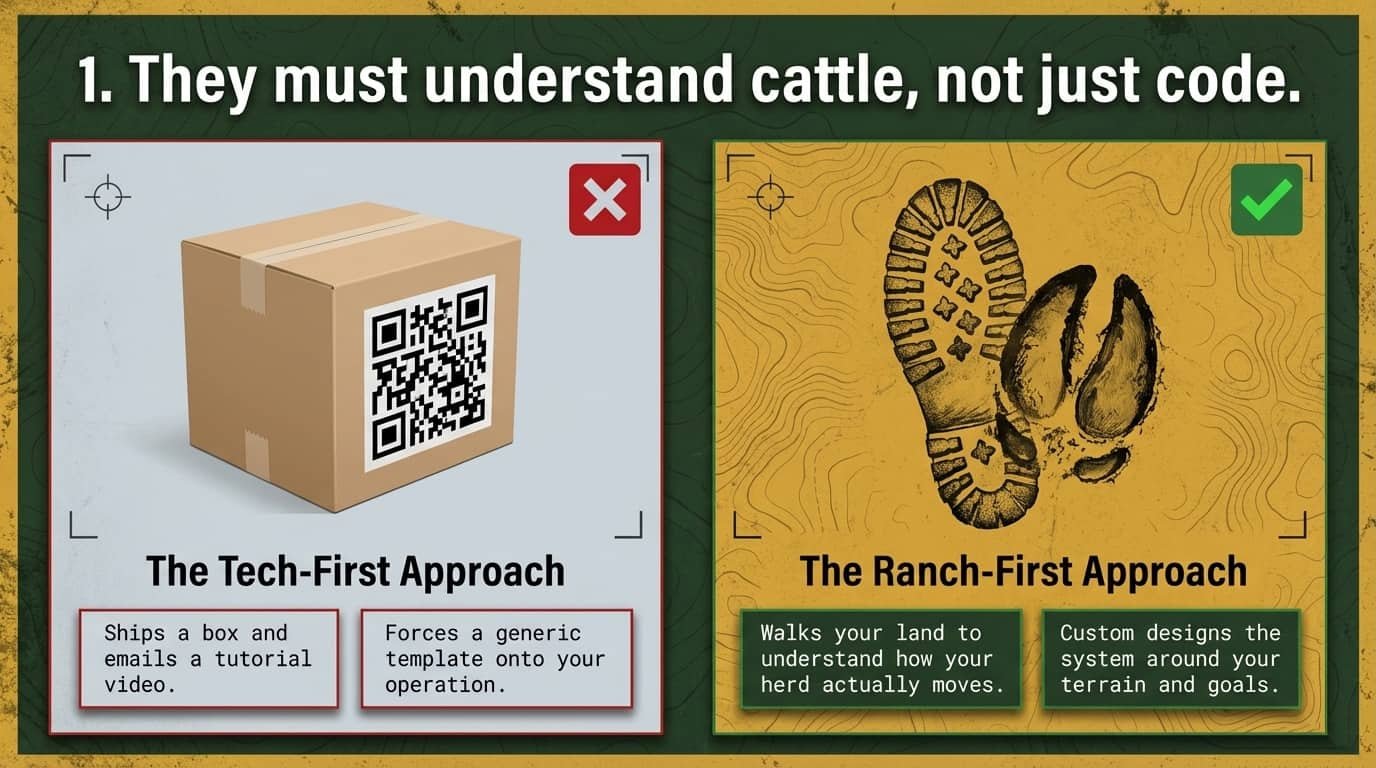
1. They Understand Ranching, Not Just Technology
The best virtual fencing companies aren’t tech companies that stumbled into agriculture. They understand how cattle move, how grazing rotations work, and what working ranch country actually looks like on the ground.
Ask any prospective partner how they approach a new property. Do they want to walk your land and understand your operation? Or do they ship you a box and point you to a tutorial video? A partner with real agricultural experience will design a system around your herd, your terrain, and your goals — not a generic template. At Okanagan Ranch and Fence Supplies, we’ve been working alongside BC ranchers since 1985, and that history shapes how we approach every new operation. That difference shows up fast once you’re in the field.
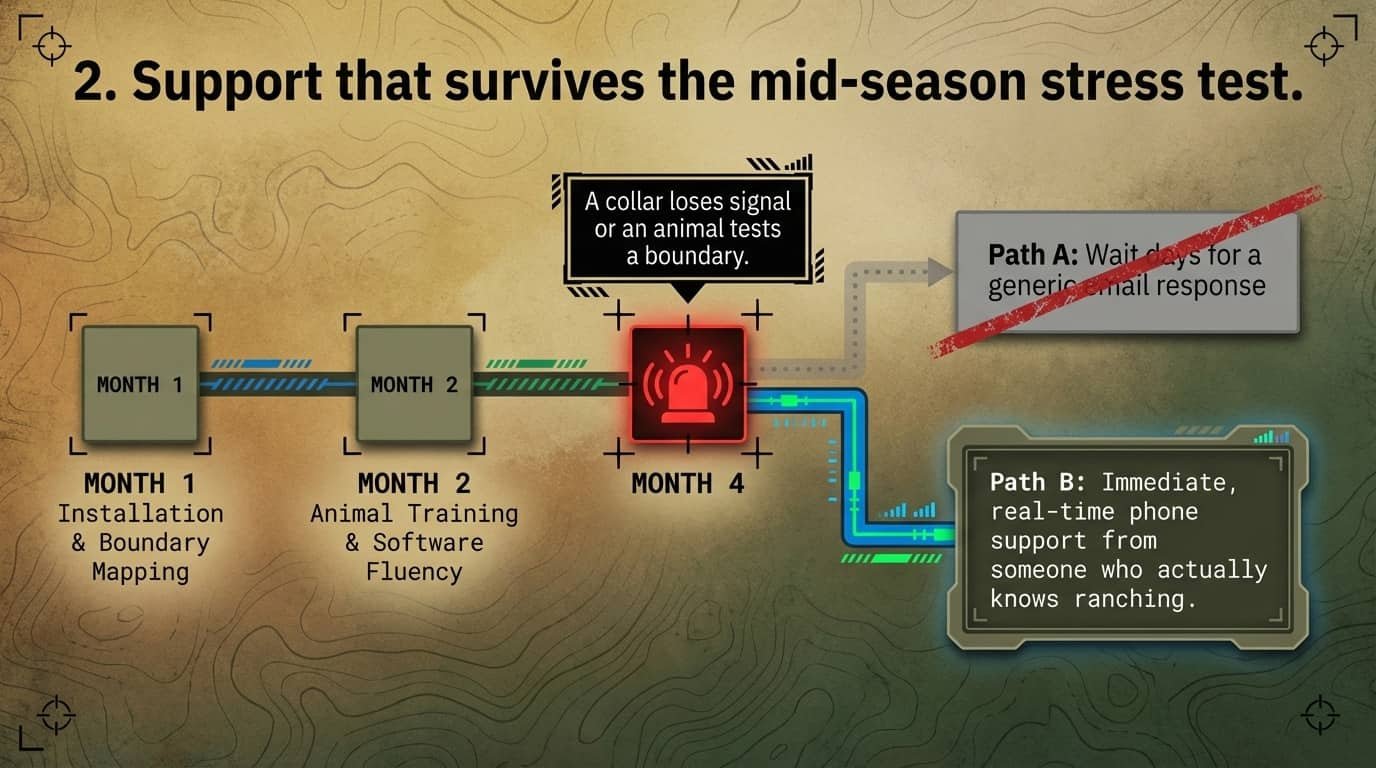
2. They Offer Real Support After Installation
A lot of companies are great at the sale. Fewer are great at what comes after.
Virtual fencing is more than dropping collars on your cattle. Boundaries need to be mapped carefully. Animals need time to learn the system. Your team needs to be comfortable with the software. And when something doesn’t work — a collar loses signal, an animal tests a boundary, the app behaves unexpectedly — you need someone who picks up the phone and actually knows what they’re talking about.
Before you commit, ask directly: What does your onboarding look like? What’s your response time when something goes wrong? Do you follow up after installation?
Remote ranches across BC and Canada can’t afford to wait days for support mid-season. Make sure your partner’s service model matches the reality of how you work.
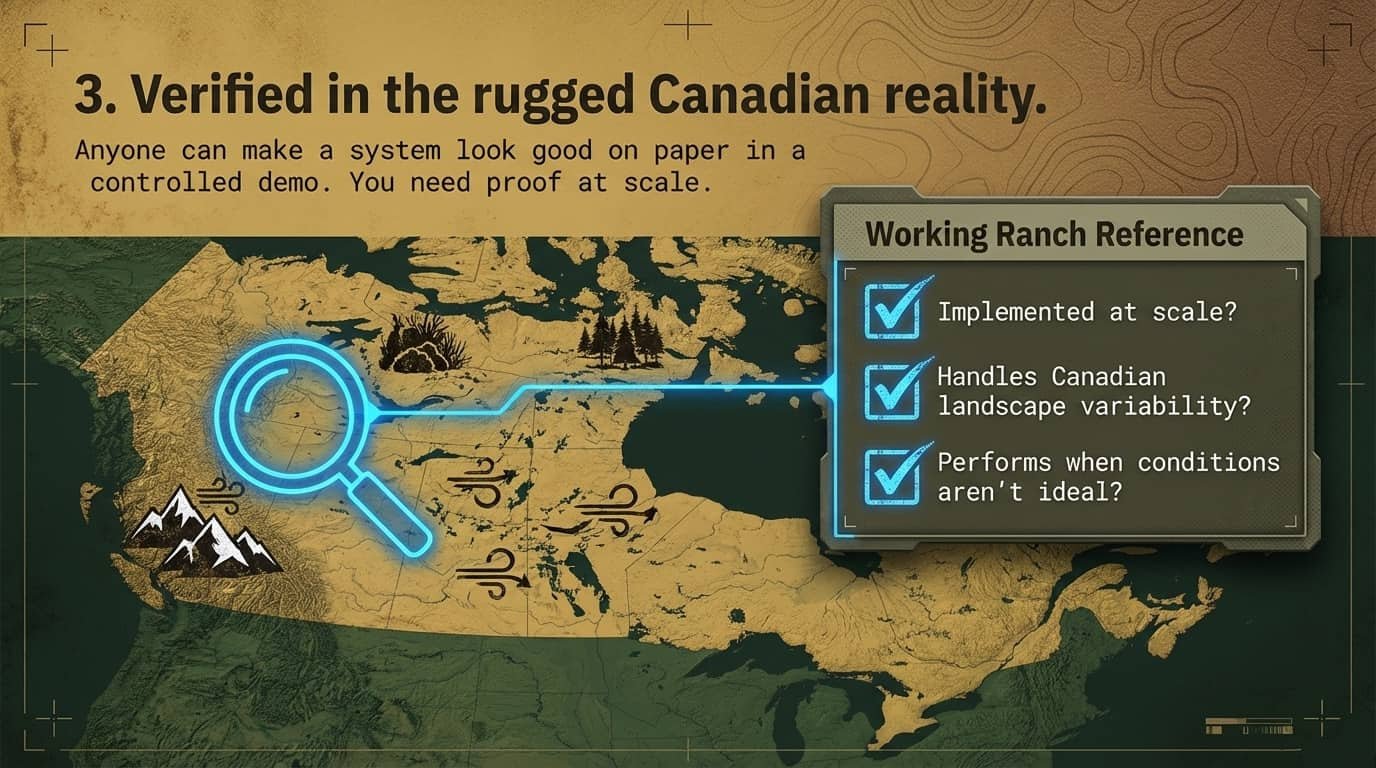
3. They Have a Track Record You Can Verify
Virtual fencing is still relatively new in Canada, which means not every company offering it has implemented it at scale on working ranches. Ask for references. Talk to other ranchers who’ve used their service. If you can, visit an operation where they’ve already done the work.
A verified track record tells you a partner can handle the variability that comes with real Canadian landscapes and real cattle — not just a controlled demo environment. Anyone can make a system look good on paper. The question is how they perform when conditions aren’t ideal.
Finding the Right Fit
There’s real value in working with a partner who knows your region — the terrain, the climate, the way cattle behave in that environment. But the best partners can also adapt that expertise wherever you’re running cattle in Canada.
Okanagan Ranch and Fence Supplies is based in BC’s interior in Armstrong (between Kelowna and Kamloops). Since 1985 they’ve been working with ranchers coast to coast all throughout Canada on innovative ranching solutions like solar water systems and solar electric fence systems. If you’re exploring virtual fencing and want to talk through what it would look like on your land, get in touch — we’re happy to start with a conversation.
Ready to Reclaim 4-5 Hours a Day? Start Your Virtual Fencing Assessment.
Every BC ranch is unique. Don’t guess if virtual fencing is a fit. Contact us today for a free, no-pressure operation assessment to determine the right eShepherd setup for your terrain, herd size, and labour goals.