
Most ranchers looking at virtual fencing start by asking what it costs. That’s the wrong first question. The first question is whether your collars can talk to anything from the ground your cattle are actually on — because the answer determines which systems are even available to you, what hardware you need, and therefore what it costs.
Get this right and the rest is straightforward. Get it wrong and you’ll find out in July, with cattle on a boundary that hasn’t updated since Tuesday.
Here’s how to work it out before you spend anything.
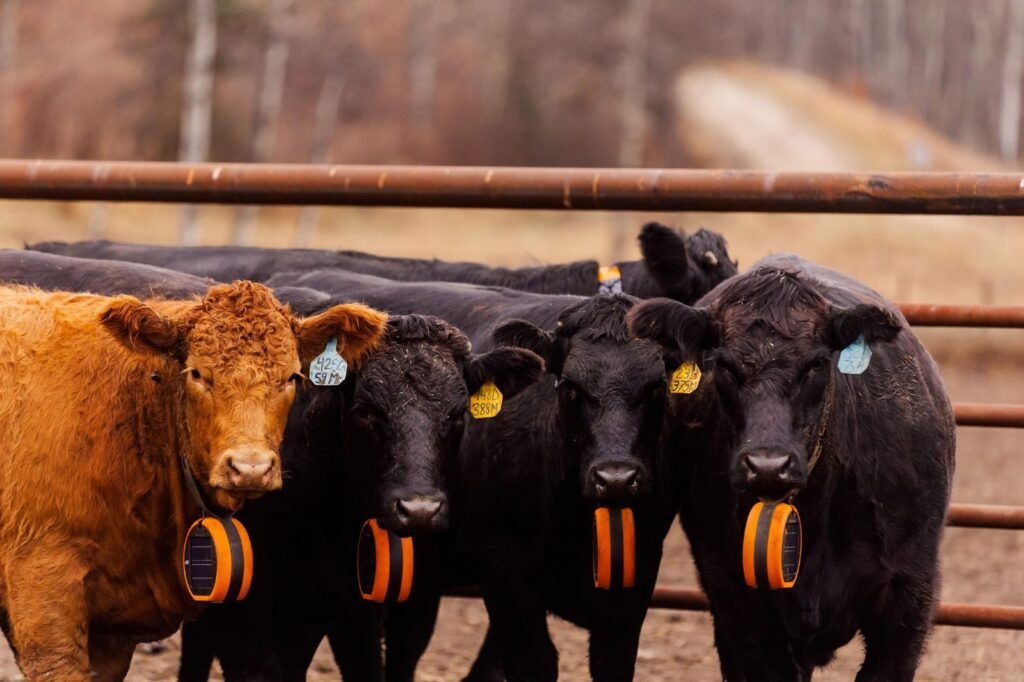
The three ways a collar connects
| Cellular | Base station (LoRa) | Satellite | |
|---|---|---|---|
| How it works | Each collar uses the mobile network, like a phone | A radio mast on your place reaches the collars; it handles the internet connection | Collars talk straight to satellites |
| Extra hardware | None | Base station, sited and powered | None |
| Best on | Areas with at least marginal service | Areas with poor or no service | Remote or scattered country with no service |
| Weak point | Dead zones in draws, coulees and timber | Needs line of sight; one station covers a limited radius | Needs a view of the sky; heavy canopy interferes |
| Setup effort | Lowest | Highest | Low |
Cellular is the simplest when it works. No infrastructure, nothing to maintain, and you can add areas or move between blocks without re-engineering anything. Collars switch between carriers, and they use a different slice of the network than your phone does, so they sometimes hold a connection where a handset struggles.
A base station makes sense when your ground is one contiguous block with bad service. It’s a real piece of equipment that needs siting for line of sight and a connection back to the internet (or it needs Starlink to work), and how far one station reaches depends on terrain, though it’s generally limited to about 15 km. The tradeoff is upfront cost and setup against independence from the mobile network.
Satellite removes the coverage question entirely. The constraint is sky visibility — fine in open country, less certain under heavy timber.
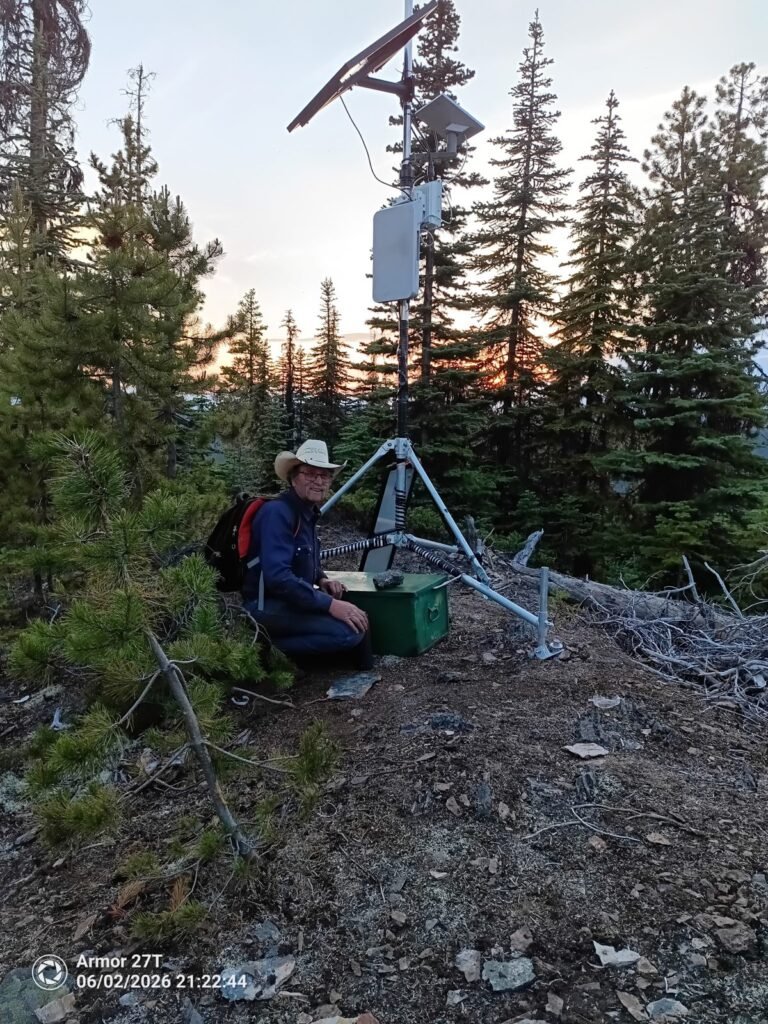
LoRa or cellular: the fast facts
If you’re choosing between the two systems we supply, this is the whole picture on one page.
| LoRa | Both | Cellular |
|---|---|---|
| LoRa-configured collars plus a base station | Solar-powered collars | Cellular-configured collars |
| Needs an assessment to find the best base station placement | 24-hour no-comms failsafe | No additional infrastructure |
| Base stations can be linked into a network | Power-saving mode | You can assess coverage yourself |
| Base stations can be moved | Signal is influenced by topography either way | |
| Base stations amplify cell signal | Remote software updates | |
| Can be Starlink-enabled | A collar is either LoRa or cellular, never both | |
| No difference in the collars or in how you use the app |
The last two rows in the middle column are the ones worth sitting with. Your day-to-day experience is identical either way — same collars, same app, same cattle. The only thing you’re choosing is how the signal gets there. But because a collar is built for one or the other, you’re choosing once.
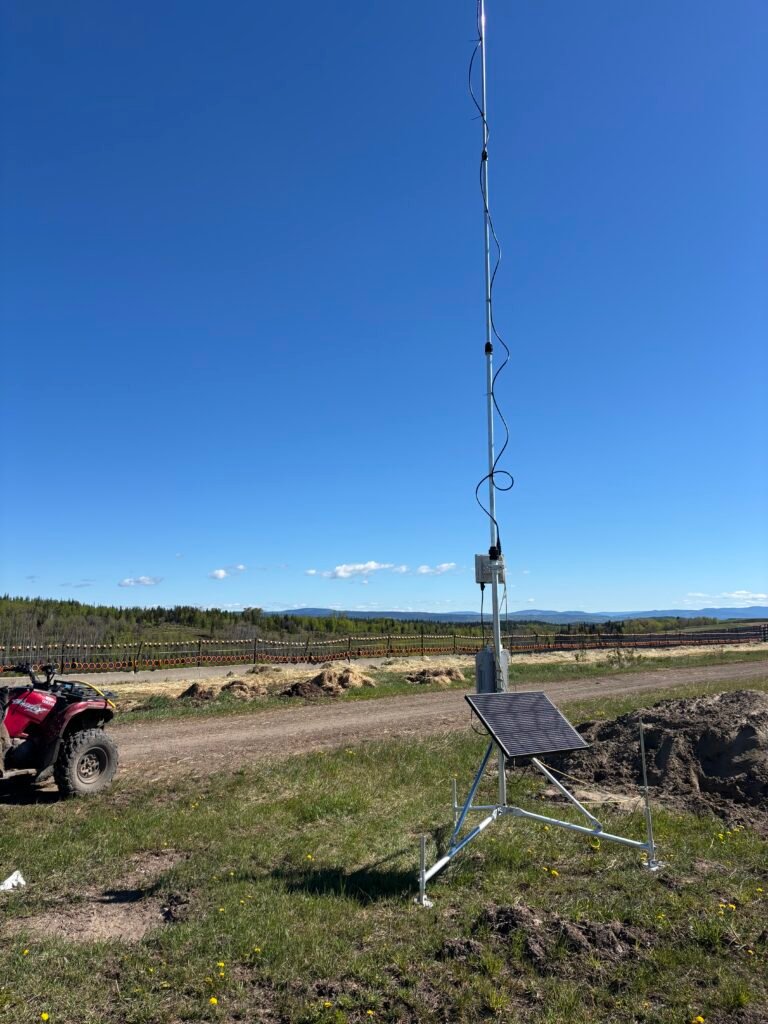
How much signal is actually enough?
Less than people assume.
If more than 70% of your text messages get through from that pasture, cellular collars will work there. Below 70%, treat it as weak coverage and plan for a base station.
That’s the threshold we use, and it’s a lower bar than most ranchers expect. You’re not streaming video — a collar sends small position updates and receives small boundary files. One to two bars is usually enough, which means a lot of country that feels like a dead zone for phone calls is actually workable.
Two things to keep in mind:
- Collars aren’t phones. They use a different bandwidth and can switch carriers automatically, so they sometimes connect where your handset won’t. Your phone test is a conservative proxy, not the final word.
- A brief loss of signal isn’t a failure. Once a boundary has reached the collar, it keeps enforcing it for a set period — eShepherd neckbands keep the boundary for 24 hours — without connection. What matters is whether collars reconnect regularly, not whether coverage is perfect every second.
What you’re really testing for is sustained dead ground: areas where collars would go hours or days without reaching the network.
How to think about coverage
This is the step most people skip, and skipping it is the most common cause of a disappointing first season. It costs you an afternoon.
1. Map the ground you’d actually graze
Not the home quarter — every block you’d want collars on, including leases and the marginal country you’d graze if you could. That last category is often the whole reason for buying, and it’s usually the worst for signal.
2. Drive or ride it with your phone
Put the phone in airplane mode for a second, then off again to force a fresh connection, and note what you get. Do this at multiple points, not once at the gate.
3. Do a walkabout test
Walk the pasture and send texts as you go, keeping a rough count of how many go through. That 70% figure is what you’re measuring against, and walking gives you a far truer picture than a single check from the truck window.
4. Think deliberately about your bad spots
Signal at the top of the hill tells you nothing. Think about:
- the bottom of draws and coulees
- timbered blocks
- behind ridges, relative to the nearest town or tower
- the far corner nobody rides to
- anywhere cattle naturally shelter or water, because that’s where they spend time
5. Think about the season
Leaf cover changes signal in bush country, and winter puts cattle in different places. Test where they’ll be in the season you plan to run collars.
At the end you should be able to answer one question: is there sustained dead ground where cattle will actually spend time? If no, cellular is likely fine. If yes, you’re looking at a base station or satellite, and now you know it before you’ve bought anything. If you want a concrete answer about whether your place has enough cellular coverage, give us a call and we’ll be happy to help you out.
If it looks like a base station
Cellular you can assess yourself. A base station is different: how many you need and where they go depends on your terrain, and that takes modelling rather than a walk around.
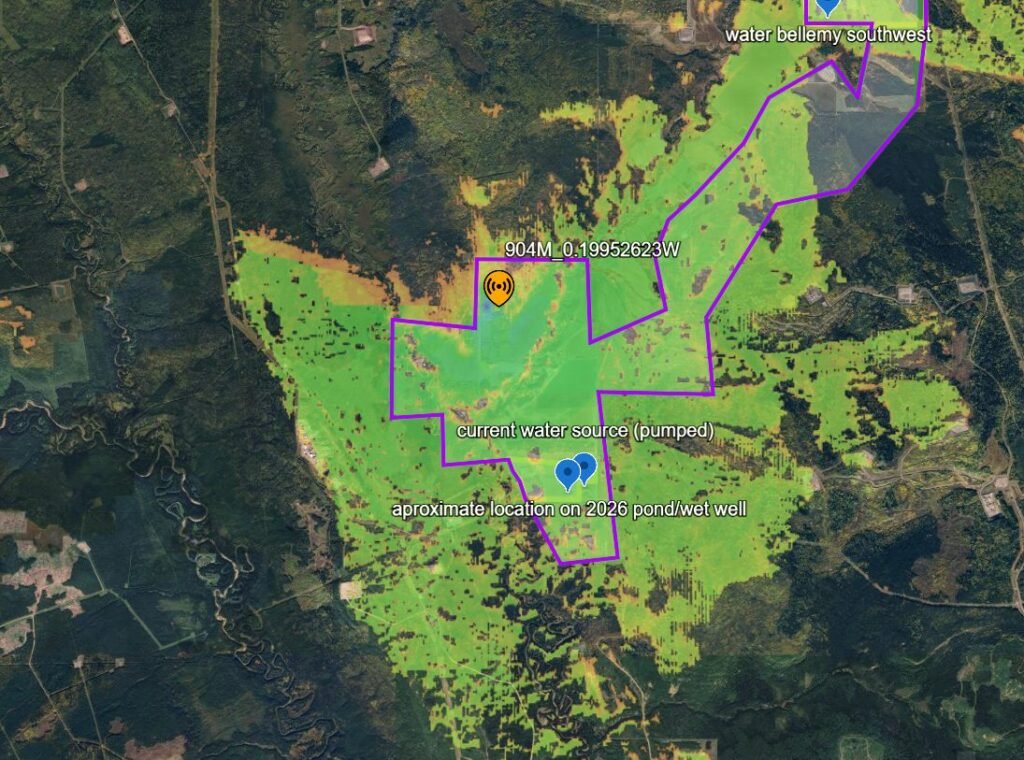
This is what the assessment produces: a picture of what one station actually reaches on your ground, so you know whether one does the job or you need two, and where they should sit.
What we need to run one for you
- Your range tenure map
- Parcel ID or RAN number
- About five minutes on the phone
What each system offers in Canada
| System | Connectivity | Note |
|---|---|---|
| eShepherd (Gallagher) | Cellular, or LoRa base station | A neckband is built for one or the other. You choose at purchase and can’t switch that unit later, so the coverage assessment matters most here. |
| Halter | Direct-to-satellite for beef; tower system for dairy and intensive flat operations | Removes the coverage question; needs sky visibility |
| Nofence | Cellular, with collar-to-collar relay; satellite backup on the newest cattle collar | The only one of these also built for sheep and goats |
| Ranchflow | Cellular | Not rolled out to market, planned to roll out in 2027 |
The eShepherd point is the one to understand if you’re talking to us. Because the neckband is built for either cellular or LoRa, the decision is made once, at order time. That’s why we walk through coverage with every customer before quoting rather than after — it’s not a formality, it’s the thing that determines what we’d even recommend.
One more to keep an eye on: Agrivanna, a Calgary company with a virtual fencing product in research and development, testing prototypes with Alberta ranches. Nothing for sale yet, but it’s Canadian and worth watching.
The awkward cases
Split coverage. Good service on the home block, nothing on the back country. This is the most common situation and it’s workable, but it needs designing rather than discovering. Options include running cellular collars on the home ranch and a base station over the rest, or going satellite for the whole operation. The wrong move is to buy cellular for everything and hope.
Leased and scattered ground. Parcels in different places, possibly changing year to year. Base stations suit contiguous blocks, so scattered ground points toward cellular or satellite. If your leases move, favour the option that travels with the collars rather than one tied to infrastructure you’ve sited.
Heavy timber. Affects satellite more than cellular, and affects base station line of sight. Bush country needs testing rather than assuming — there are operations running virtual fence successfully in broken, forested mountain terrain, so it’s not a bar in itself.
Crown range. Often the worst coverage: large, timbered country. But it carries the biggest return, because these areas usually aren’t feasible to fence at all.
Winter. Cattle move to different ground for corn and swath grazing, and that ground may have different coverage than summer pasture. If you plan to run collars year-round, test both.
No cell coverage at all. A base station still needs a way back to the internet, and Starlink does that job. If you have Starlink at the yard, or are willing to put it in, a base station becomes workable on ground with no cell service whatsoever. You can also mix Starlink and LoRa across an operation where that suits the layout.
No coverage anywhere, scattered ground. If you genuinely can’t get signal and a base station won’t reach your blocks, eShepherd isn’t the system for you. Look at satellite. We’d rather say that now than sell you something that won’t work.
What to do with your answer
Once you know your coverage picture, the rest follows quickly:
Usable signal across the grazing area
Cellular collars — simplest setup, no extra hardware
One contiguous block, poor signal
Base station — more upfront, but independent of the network
Scattered or remote ground, no signal
Satellite system
Split coverage
Worth a conversation; there are good answers but they need planning
Bring your coverage notes when you talk to any supplier, ours included. A dealer who quotes you without asking about connectivity is quoting on assumptions.
Not sure what you’ve got?
If you’re in BC, Alberta or Saskatchewan and want help working through it, we’ll go through your ground and your coverage with you. If what you need is a satellite system we don’t sell, we’ll tell you that too.
Okanagan Ranch & Fence Supplies · Armstrong, BC · 250-309-4955