

Gallagher eShepherd virtual fencing sounds like a no-brainer — no wire, no posts, no expensive repairs after a hard winter. But it’s not the right fit for every operation, and the last thing you want is to invest in a system that doesn’t work for your land.
The good news is that feasibility isn’t complicated to figure out. Here are the key factors to work through before you commit.
1. Herd Size and Composition
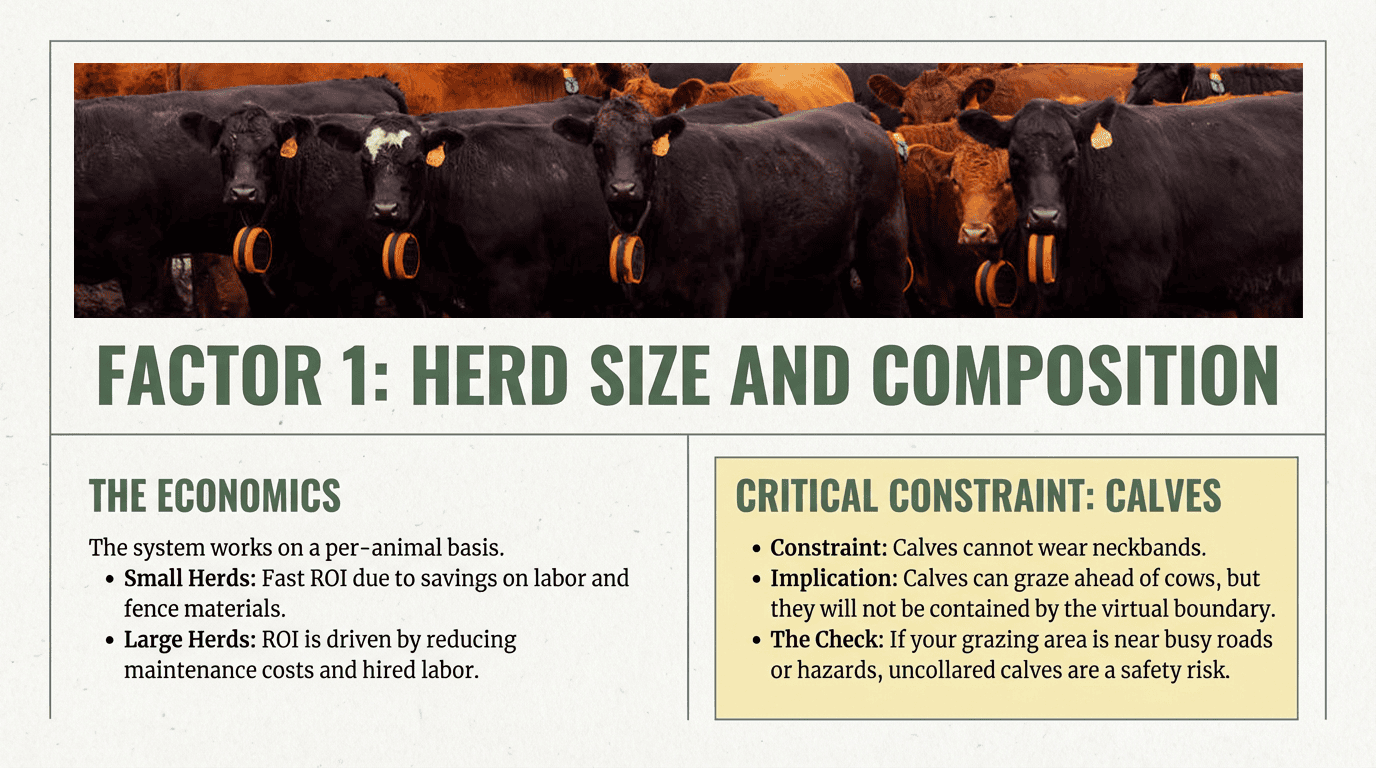
With the Gallagher eShepherd system, it works on a per-animal basis — each animal wears a GPS collar. That means your upfront cost scales with your herd size, which is worth thinking through carefully. A few key considerations:
Calves cannot wear neckbands. This means:
- They can graze ahead of cows, often improving calf gains.
- They will not be contained by a virtual boundary, so proximity to roads or hazards matters.
Small herds often see a fast ROI because they save heavily on labour and fence materials.
Large herds still benefit, especially if you’re currently spending heavily on physical fence maintenance or hired cowboys for moving cows. For larger operations, the math still works — but it’s worth mapping out the numbers before you start.
Choosing the right Virtual Fencing Partner is super important, so you can be walked through what to expect for your specific herd.
2. Terrain and Land Type
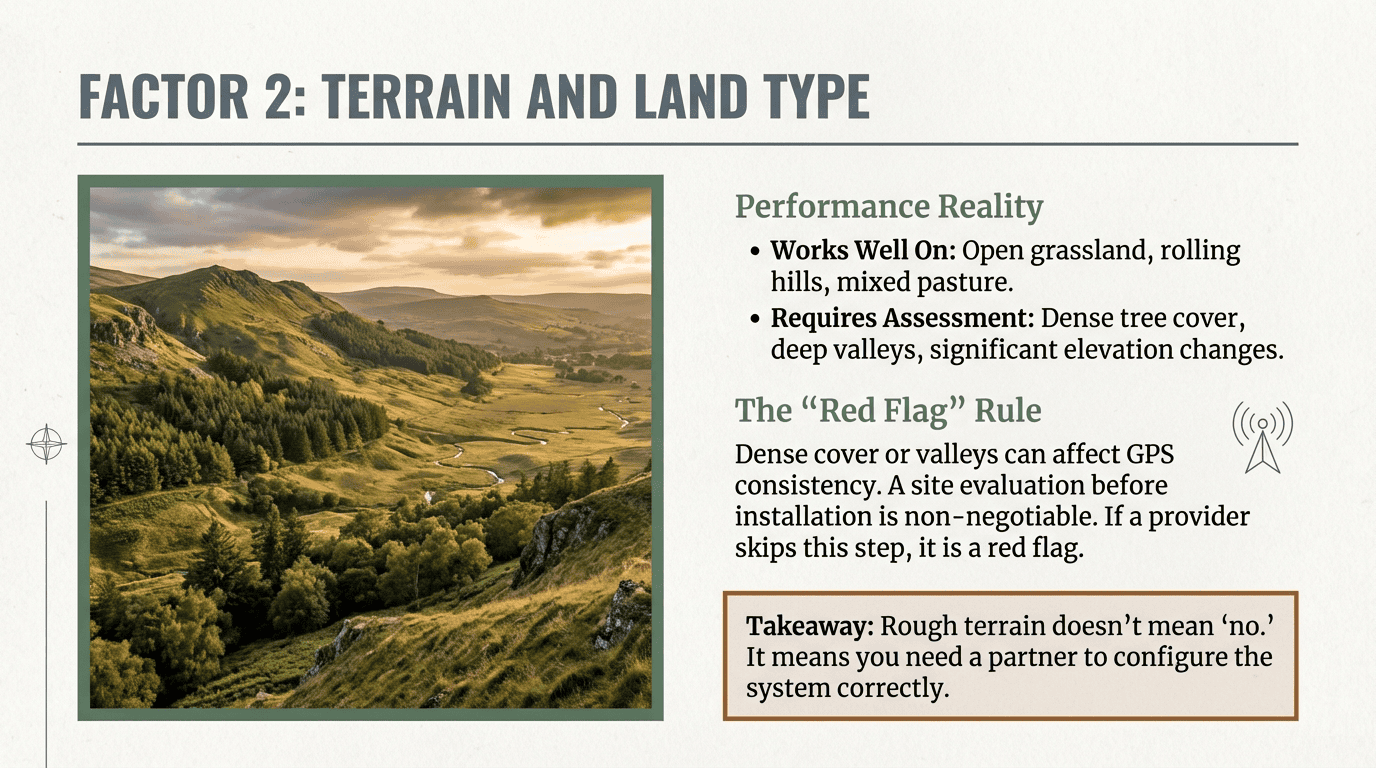
eShepherd virtual fencing performs well across a wide range of terrain — open grassland, rolling hills, and mixed pasture. Where it gets more complicated is in areas with dense tree cover, deep valleys, or significant elevation changes that can affect GPS signal consistency.
That doesn’t mean it won’t work — it means you need a partner who knows how to assess your land honestly and configure the system accordingly. A site evaluation before installation is essential. If a company skips that step, that’s a red flag.
Connectivity options for remote terrain:
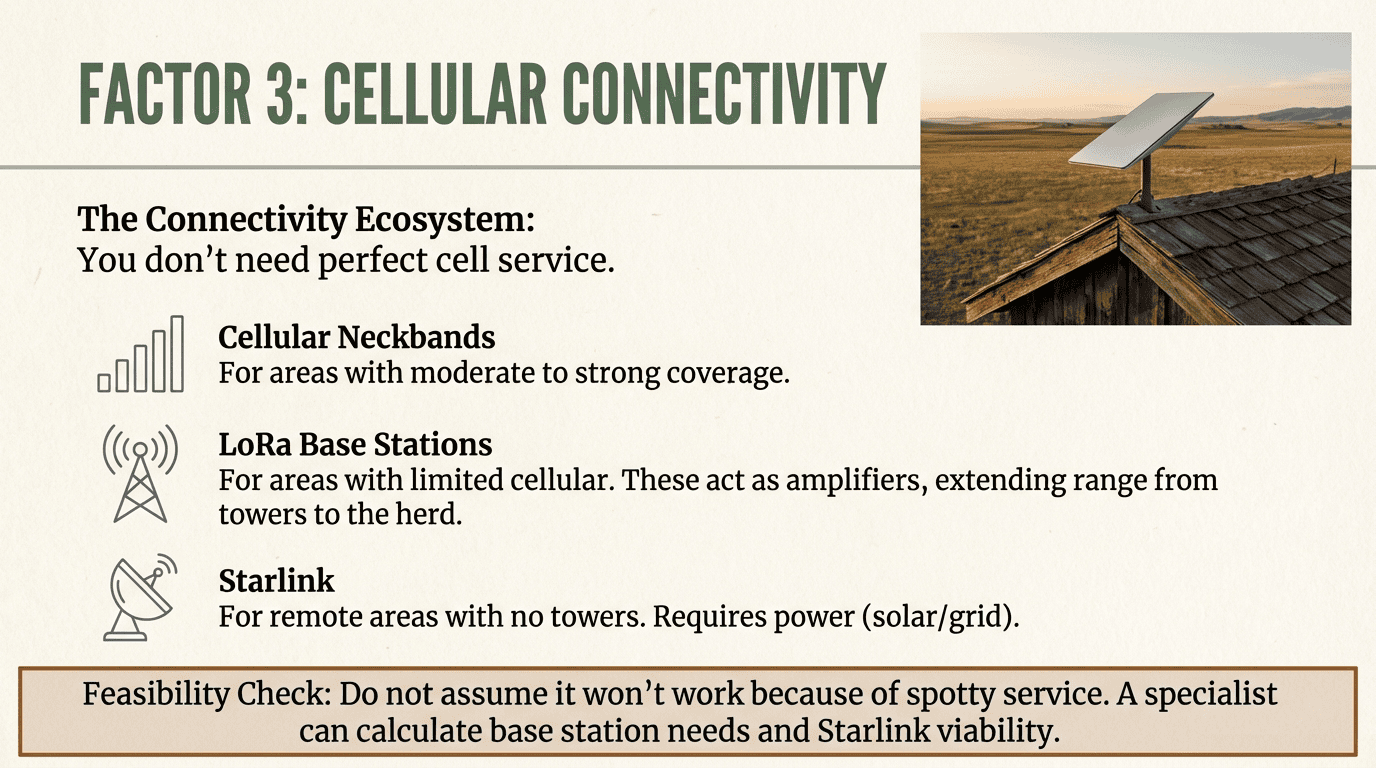
- LoRa Base Stations extend range and help in areas with weaker cell coverage. The base station essentially serves as an amplifier, increasing the signal strength to cellular towers
- Starlink can be used when there are no nearby cell towers — but it requires power (often solar) and has a monthly cost.
If you’re unsure how to set up the eShepherd base station system for your ranch, make sure you choose a virtual fencing provider that is knowledgeable in remote rangeland areas, so you can get the right advice tailored to your options.
3. Cellular Connectivity
Connectivity is one of the biggest feasibility questions ranchers ask — and there’s a real answer for it.
eShepherd offers two connection types:
- Cellular neckbands – great where coverage is moderate to strong.
- LoRa neckbands – used with base stations where cellular is limited.
If your ranch has spotty service, a Virtual Fence specialist (like Okanagan Ranch & Fence Supplies) can assess:
- How many base stations you would need
- Whether Starlink is required
- The most cost-effective option for your geography
This is one of the most common feasibility questions for ranches in rural BC and Alberta and across Canada — and it has a real answer. Don’t assume it won’t work until you’ve checked.
4. Your Current Fencing Situation
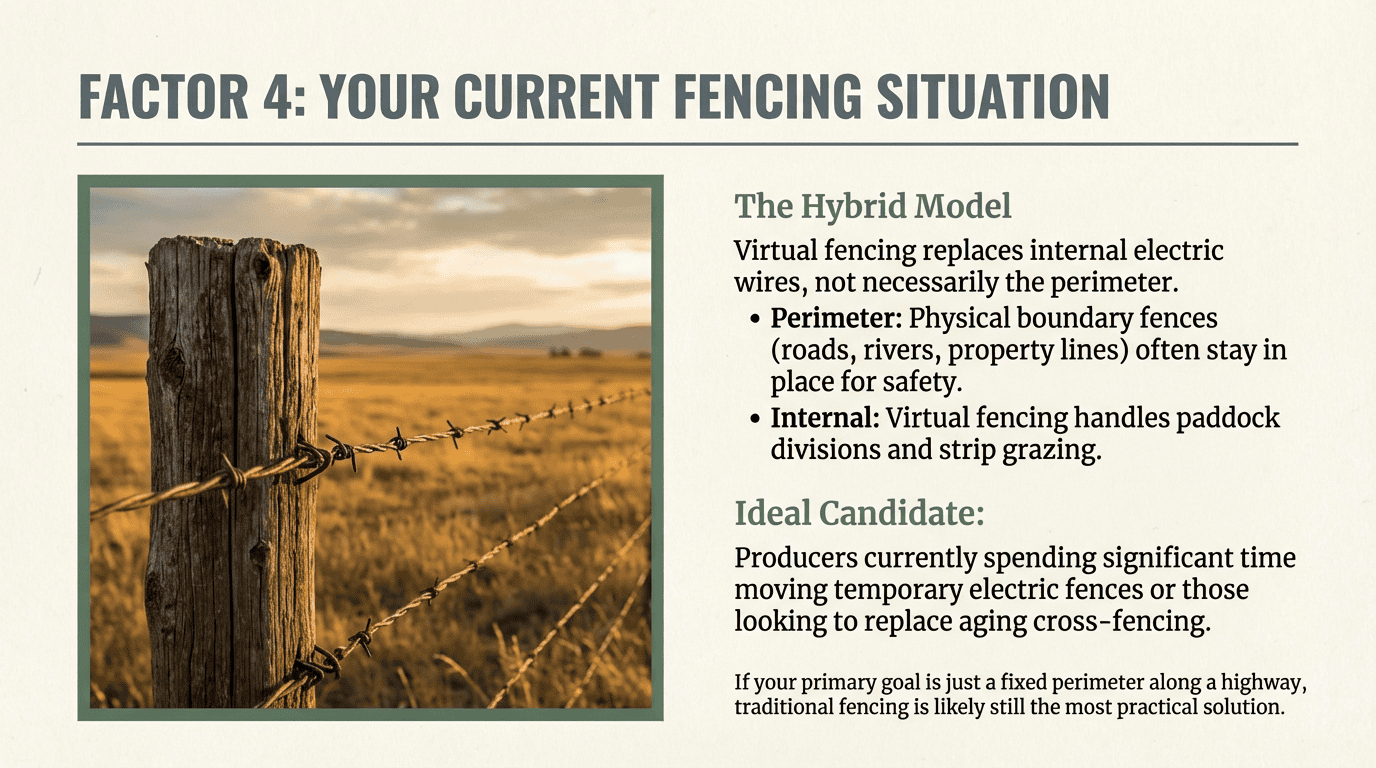
Virtual fencing doesn’t always replace physical fencing entirely — in many operations it works alongside it. Boundary fences along roads, rivers, or property lines often stay in place, while virtual fencing handles the internal paddock divisions that you’d otherwise be moving seasonally.
If you’re spending significant time and money moving a temporary electric fence, or if you’ve been wanting to implement rotational grazing but the labour cost has held you back, eShepherd virtual fencing is likely a strong fit.
5. Your Grazing & Operational Management Goals
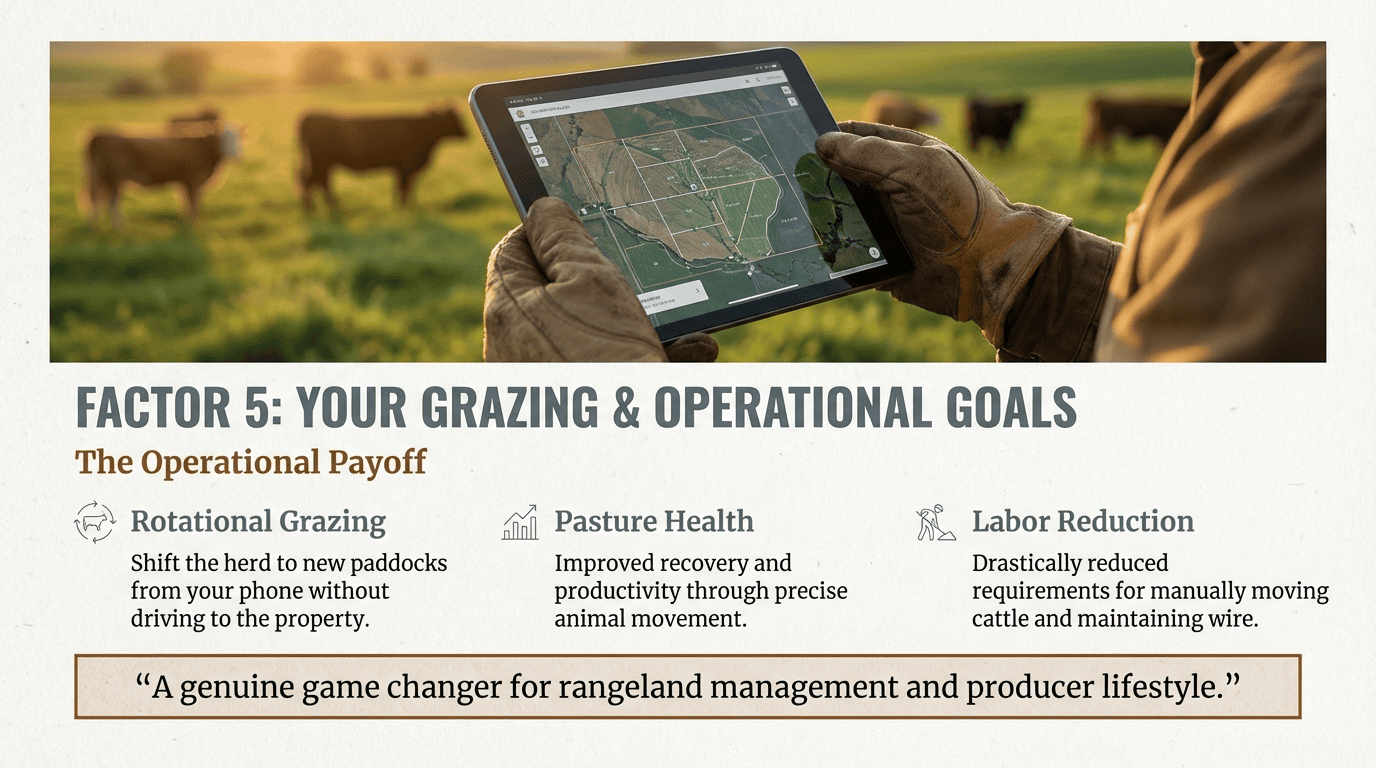
If any of these are priorities, virtual fencing directly supports them:
- More precise rotational or adaptive grazing
- Reduced labour requirements
- Improved pasture recovery and productivity
- Ability to adjust cattle location from your phone
- Lower fencing repair costs over time
Virtual fencing is particularly well-suited to rotational grazing, it is the ability to shift your herd to a new paddock from your phone, without driving out to the property, is a genuine game changer for land health and productivity.
If you’re mainly looking to contain cattle along a fixed perimeter, a traditional fence may still be the more practical solution for that specific need.
Is It Feasible for You?
If you’ve read through the above and most of it sounds applicable to your operation, there’s a good chance virtual fencing makes sense. The honest answer for most ranchers is: it depends on the details, and those details are worth a proper conversation.
At Okanagan Ranch and Fence, we start every virtual fencing inquiry with a straightforward assessment, no pressure, no assumptions. We want to understand your land, your herd, and your goals before recommending anything. If it’s a good fit, we’ll tell you. If it’s not, we’ll tell you that too.
Curious whether virtual fencing could work on your ranch? Get in touch and let’s find out together.
Request Your Free eShepherd Feasibility Assessment Today!
Stop guessing. We’ll assess your herd, land, and connectivity to provide an honest, no-pressure recommendation tailored specifically to your ranch.