
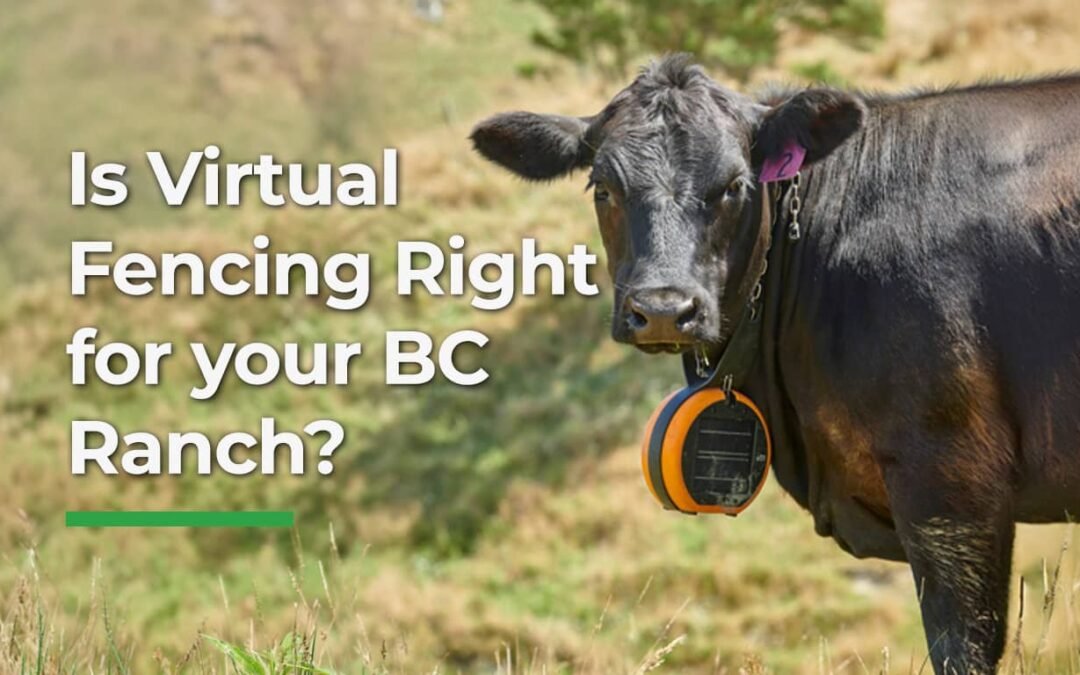
A few years ago, the idea of managing cattle without physical fences would have sounded like science fiction to most BC ranchers. Today, producers from the Peace Country to the Okanagan are doing exactly that, and the results are prompting serious conversations about what this technology could mean for the future of ranching in the province.
This isn’t a pitch. It’s a ground-level look at how virtual fencing is actually being used on BC ranches right now, what’s working, what questions producers are asking, and what you should know if you’re thinking about it for your own operation.
The Problem Most BC Ranchers Know Too Well
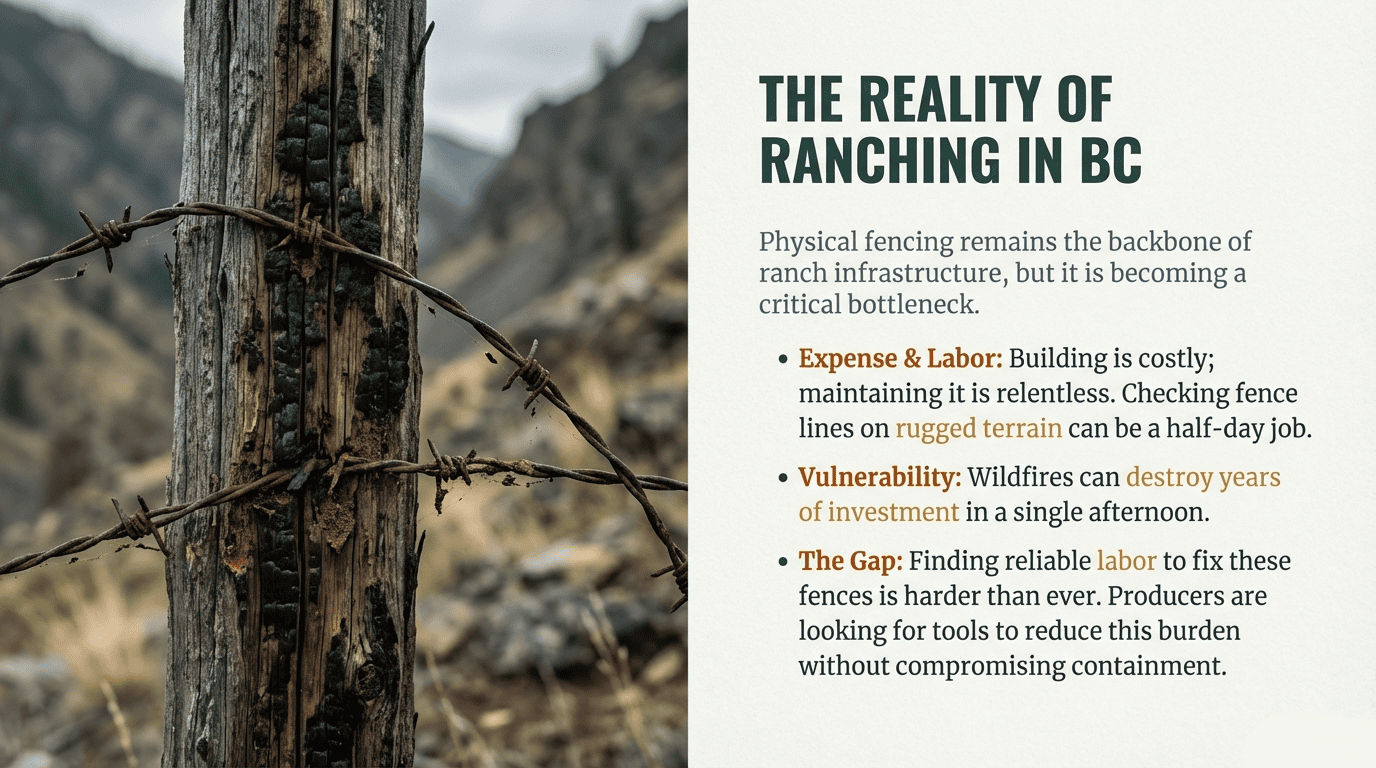
Physical fencing is the backbone of ranch infrastructure, but it’s also one of the biggest headaches. Building it is expensive. Maintaining it is relentless. Wildfire can take years of investment out in an afternoon. And on operations where grazing areas span thousands of acres of remote or rugged terrain, simply checking your fence line is a half-day job.
Add in the challenge of finding and keeping reliable ranch labour, and it’s easy to see why producers are open to tools that can reduce the burden, without compromising containment or grazing outcomes.
What BC Ranchers Are Actually Experiencing
The most consistent theme that comes up when talking to producers using virtual fencing is time. Not just a little time. These are significant, meaningful hours back in their day.
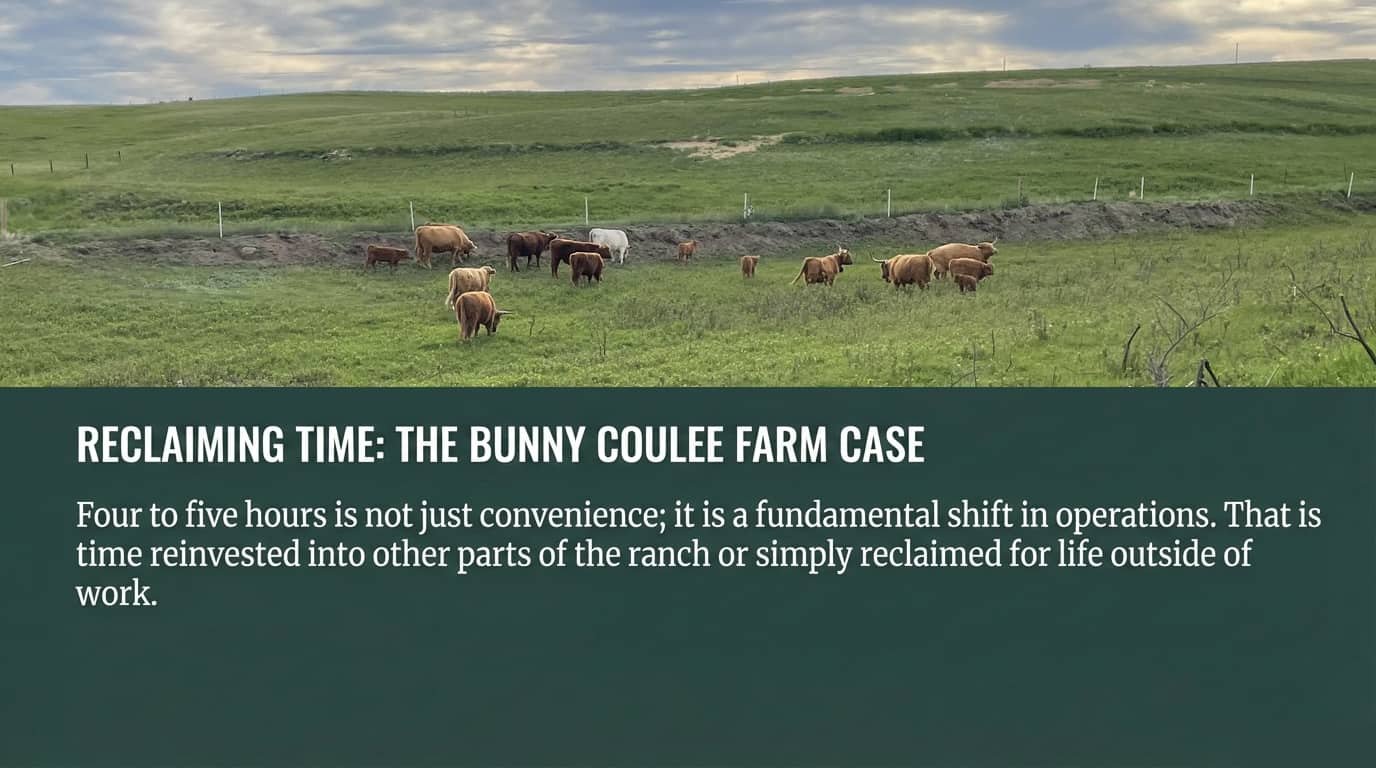
“The main reason I love eShepherd is that it eases my labour load so I can better manage cattle in tough terrain. It has saved me four to five hours a day during the grazing season.”
— Lindsay Jamieson | Bunny Coulee Farm
Four to five hours a day is a remarkable number. For a rancher managing cattle in difficult country, that’s time that can be reinvested into other parts of the operation, or simply reclaimed.
Lindsay has also been running the system year-round, including through bale grazing in winter. That’s a use case that surprises many people, but it makes practical sense. You can set out weeks’ worth of bales at once, then simply open a virtual fence to the next bale when it’s time to rotate. No extra trips. No extra labour.

Eshepherd View from Phone by Bunny Coulee Farm
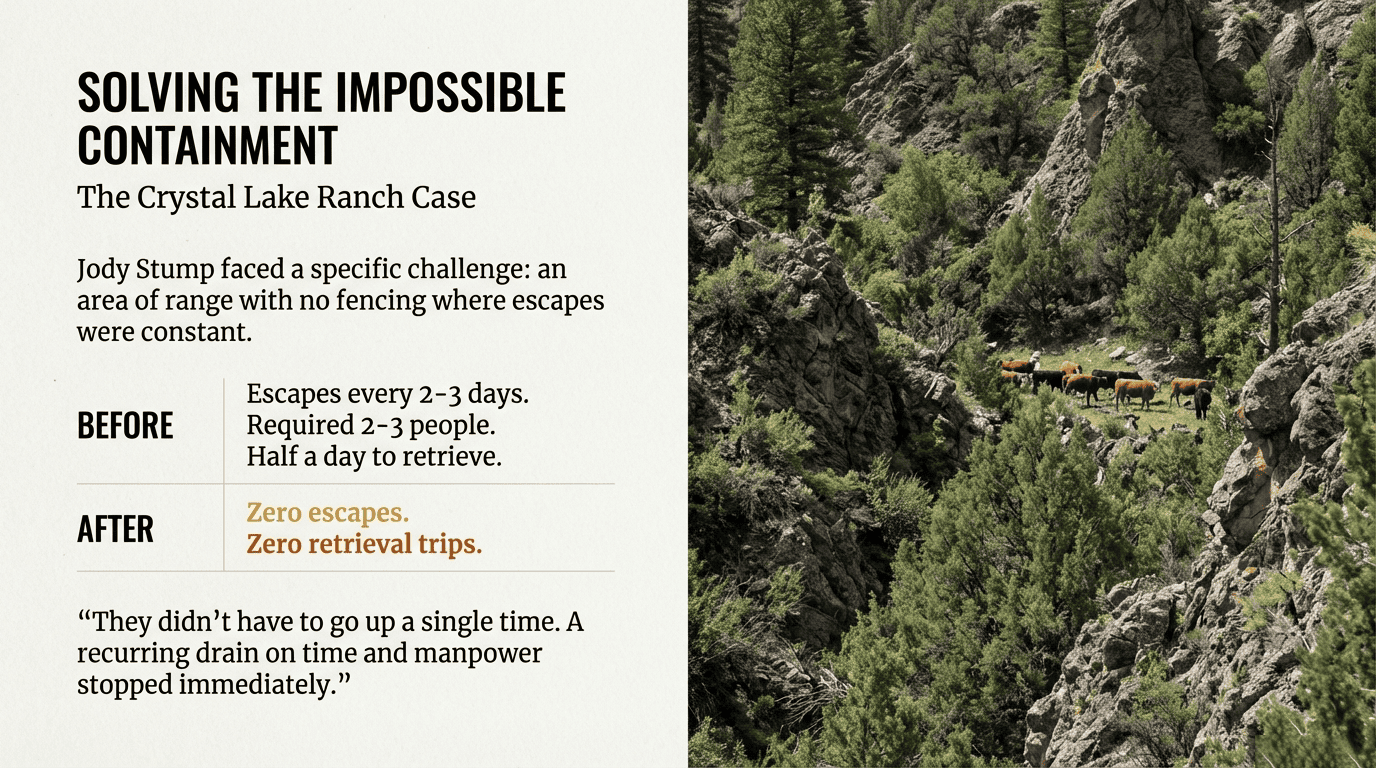
Jody Stump at Crystal Lake Ranch offers a vivid example of what containment improvement looks like in practice. On one area of range with no fencing at all, escapes were a constant problem before eShepherd.
“Previous years, cattle were getting out every two to three days, and it would require two or three people to get them back. That was over half a day of work every time. After the collars were put on, they didn’t have to go up a single time. The cattle didn’t escape.”
— Jody Stump | Crystal Lake Ranch
That kind of result is hard to argue with. What had been a recurring drain on time and people, sometimes multiple times a week, simply stopped. For operations dealing with aging or incomplete fencing on range, that kind of containment reliability changes the math on what’s possible.
A Practical Answer to Aging Infrastructure and Crown Land Challenges
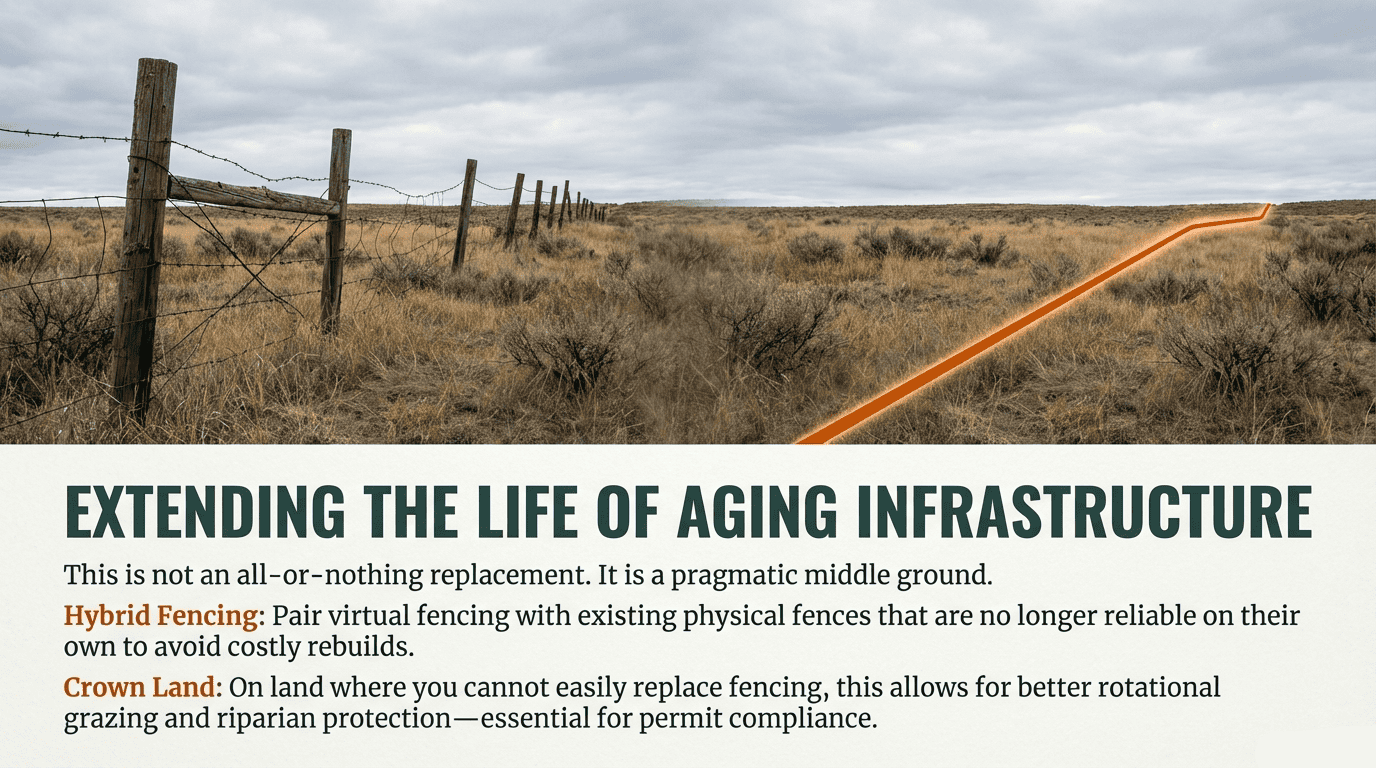
One of the more compelling use cases in BC is helping operations extend the useful life of aging fences. Rather than facing a costly rebuild, producers like Jody Stump are pairing virtual fencing with their existing infrastructure to maintain containment on pastures where the physical fence is no longer reliable on its own. It’s a pragmatic, cost-effective middle ground.
On Crown land, where fencing is often older and producers have limited ability to replace it, virtual fencing also opens the door to better rotational grazing and riparian protection, outcomes that matter both for the land and for permit compliance.
Why System Design Matters in BC Specifically
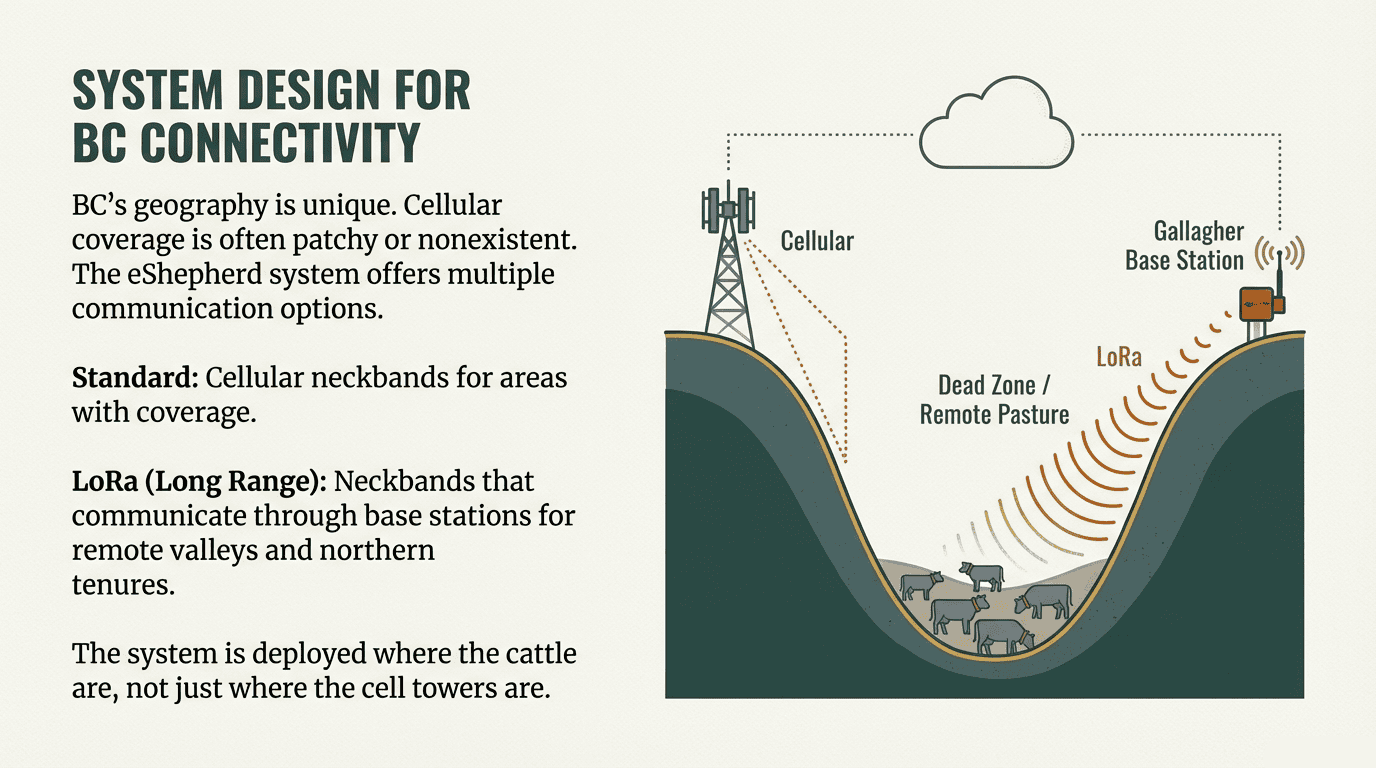
Not all virtual fencing systems are built the same. In BC, that difference matters more than in most places. Cellular coverage across the province’s grazing areas ranges from patchy to nonexistent. Systems that rely entirely on cellular connectivity face real limitations in the field.
The Gallagher eShepherd system addresses this with multiple communication options:
- Standard cellular neckbands for operations with coverage
- Long Range (LoRa) neckbands for low-connectivity areas, communicating through base stations
For ranchers in remote valleys, northern grazing tenures, or areas with unreliable signal, this approach means the system can actually be deployed where the cattle are, not just where the cell towers are.
Is Virtual Fencing a Fit for Your Operation?
Virtual fencing isn’t a replacement for all physical infrastructure, and it’s not the right fit for every situation. But it tends to be a strong candidate when:
- Labour availability or cost is a limiting factor in your grazing management
- You want to implement rotational grazing but lack the infrastructure to do it practically
- You have remote or difficult-to-access pastures that take significant time to monitor
- You’re managing livestock near riparian areas or other sensitive zones
- Existing fences are aging and you’re looking for options short of a full rebuild
- You graze on Crown land where fencing replacement isn’t always an option
What’s the Cost of eShepherd Virtual Fencing
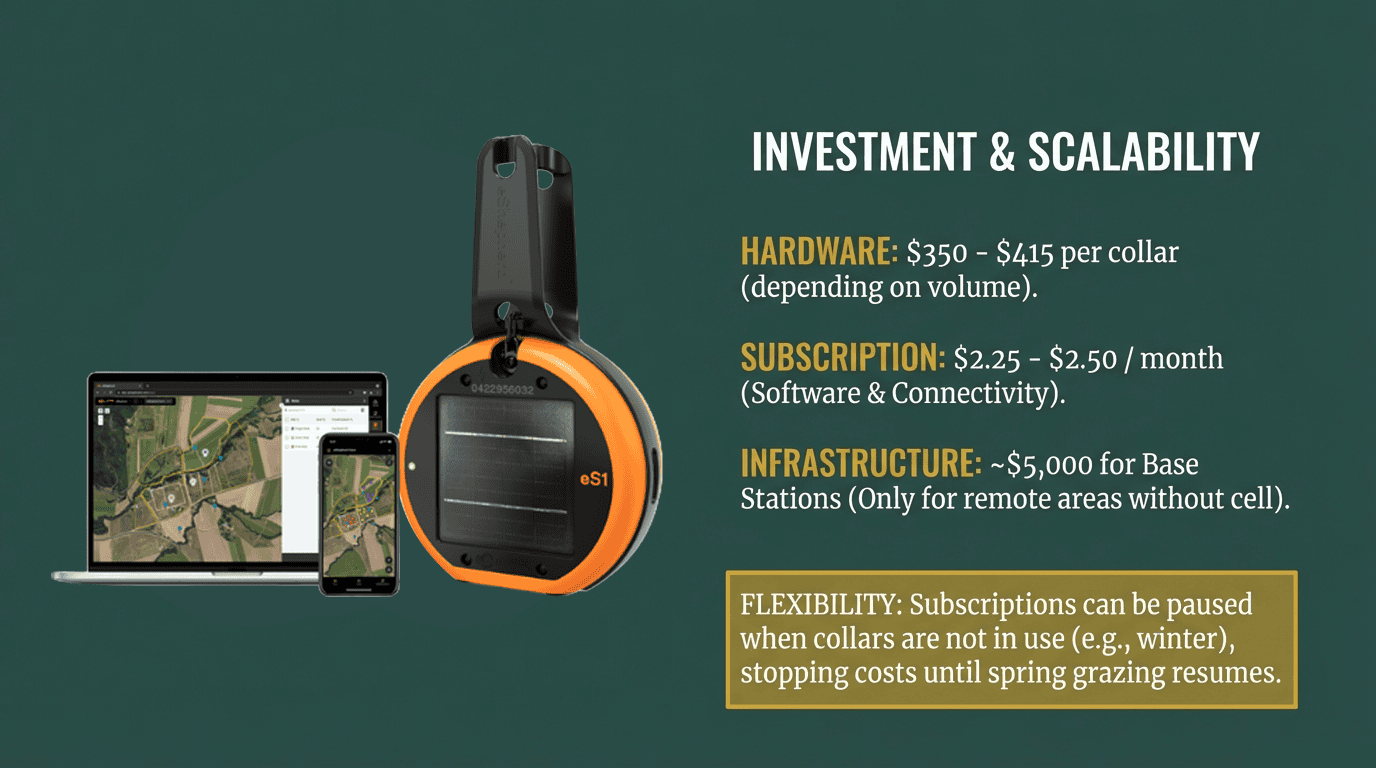
The eShepherd system is priced between $350 – $415 per collar (depending on volume purchased), making it a scalable option whether you’re outfitting a small mob or an entire herd.
The collars need a subscription (which is between $2.25 – $2.50/mo) in order to run, but when you aren’t using the collars (like during winter), you can turn them off, and the subscription pauses until spring grazing resumes!
For most properties with reasonable cell coverage, that’s all you need. However, if you’re running livestock in more remote areas with limited connectivity, a base station may be required — these come in at $5,000. In remote areas, the number you need isn’t a straight yes or no; call or email us for an assessment to determine the right setup for your operation.
Is there Funding for eShepherd Virtual Fencing?
Yes! There are two main programs that currently support virtual fencing adoption in BC: OFCAF and BMP funding. Depending on how you combine programs, your out-of-pocket cost can be very low. Check out our blog for details on these programs.
In other areas of Canada, there are programs available as well – and yes, we can ship all across Canada!

About the Author
Sarah Fennell is an agrologist with a background in range management and a lifelong connection to agriculture in the BC interior. She grew up haying, competing in barrel racing and team roping, and caring for family horses and steers. Her family has been in the fencing industry for over 35 years through Okanagan Ranch and Fence Supply.
Okanagan Ranch and Fence Supply is the only authorized Gallagher eShepherd dealer with a home base and warehouse in British Columbia. Sarah’s role is working directly with ranchers across the province on system planning, setup, and ongoing support.
If you’re curious whether virtual fencing could work on your operation, reach out for a no-pressure conversation. Every ranch is different, and the right starting point is a real discussion about what you’re trying to solve.
Ready to Reclaim 4-5 Hours a Day?
Request a Quote For Your Virtual Fencing Assessment.Every BC ranch is unique. Don’t guess if virtual fencing is a fit. Contact us today for a free, no-pressure operation assessment to determine the right eShepherd setup for your terrain, herd size, and labour goals.