

Wondering about eShepherd virtual fencing feasibility on your place? Virtual fencing can change how you graze: move paddocks from your phone, keep cattle out of riparian areas, and stop building interior fence you’ll only tear down again. But it isn’t the right fit for every operation, and it’s better to know that before you spend anything.
This checklist walks through what makes virtual fencing work well: your setup, your herd, your facilities, your land and how you manage day to day. A “no” on one item doesn’t rule you out. Most have a workaround, and we’ll tell you honestly when they don’t.
If you want to know what it costs, read our eShepherd virtual fencing cost guide first. This one is about whether it’ll work on your place.
1. Your setup
Are you comfortable using a phone or computer app? You’ll draw fences, move paddocks and check alerts in the eShepherd app. You don’t need to be a tech expert, but someone on the operation should be comfortable with a smartphone. We’ll walk you through the rest.
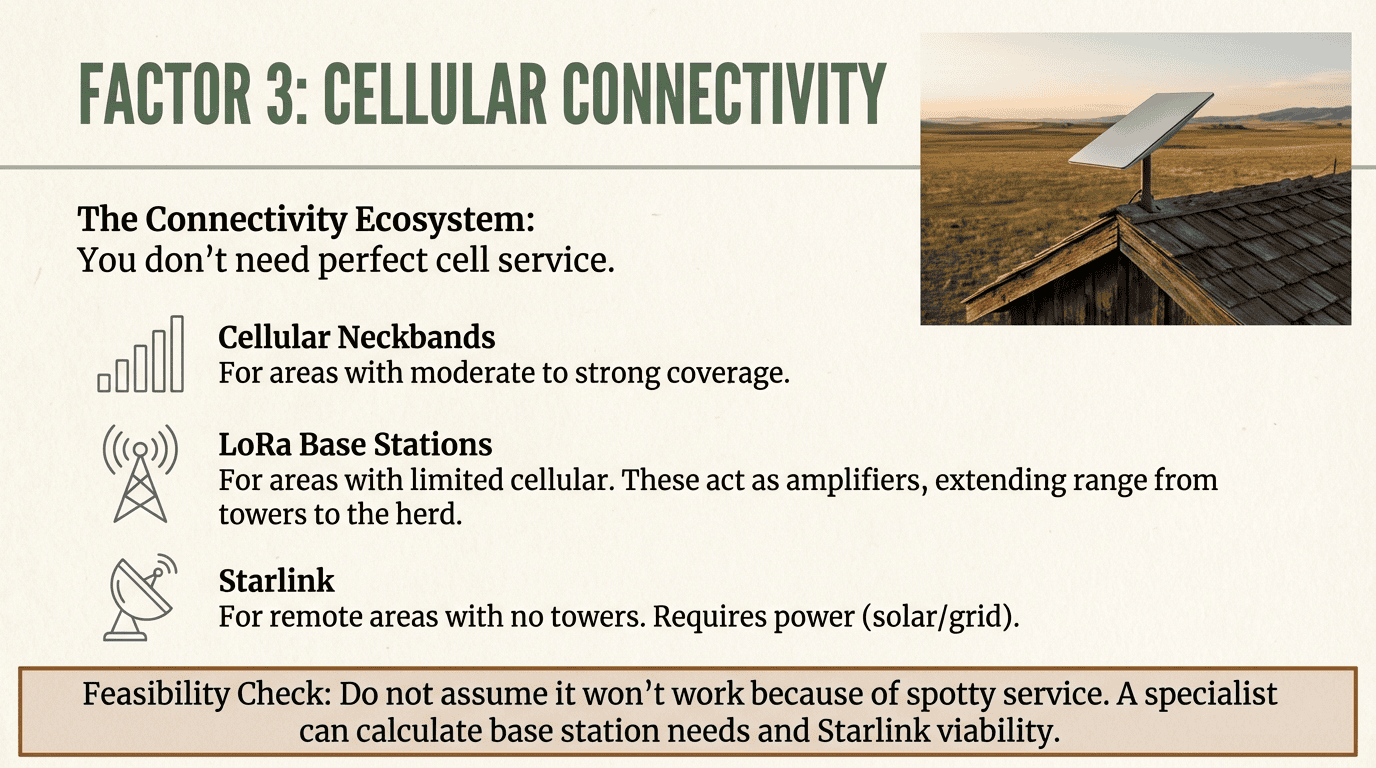
Do you have internet, Starlink, or cell service at home? You need it to see the dashboard and get alerts.
Cellular or base station neckbands? Cellular neckbands work if you can send a text from about 70% of your grazing area. Where there’s no usable signal, LoRa neckbands talk to a base station instead. We’ll help you figure out what type of technology will work best for you.
If you need a base station, can it get online and get power? A base station has to connect to the internet itself, through cell service or Starlink, and it needs solar or grid power. The cattle can be out of cell range, but the base station can’t be. We include this in our free assessment.
2. Your herd
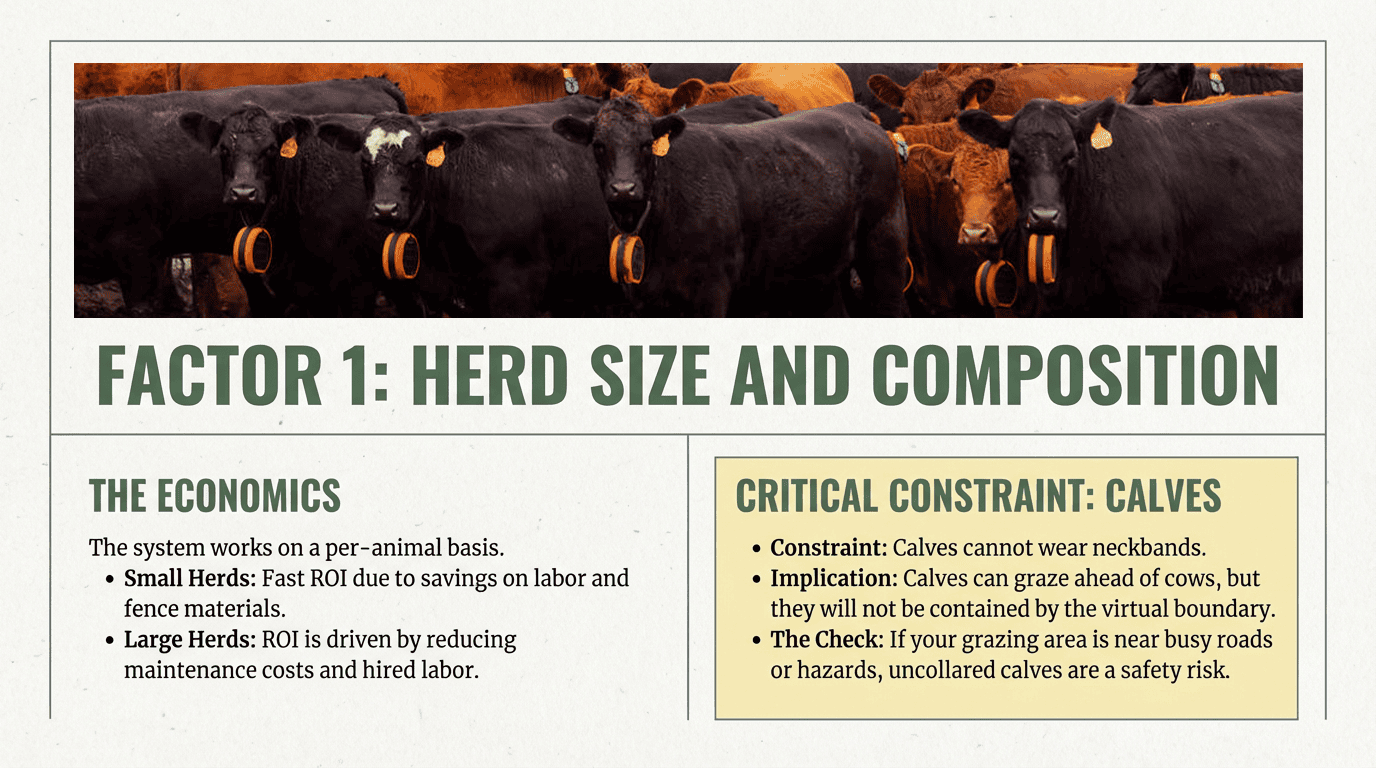
Do you run at least 20 head? The minimum order is 20 neckbands. Cattle learn the virtual boundary from each other, so a smaller group doesn’t train reliably.
How settled are your cattle? Calm, social herds pick it up fastest. Flighty or nervous cattle can still learn, but expect training to take longer.
Are any of them still growing? Neckbands are fitted to the animal’s neck. If cattle will put on a lot of weight while wearing them, plan to check and adjust the fit during the season.
Running cow-calf pairs? Calves too small for a neckband aren’t held by the virtual fence. They’ll usually stay near their mothers, but choose pastures away from roads and hazards while calves are young.
3. Your facilities
Do you have a chute or squeeze? You’ll need one to fit neckbands, adjust them, and refit any that come off. Gallagher requires the animal to be restrained in a working cattle crush for fitting.
Do you have a fenced area for training? Cattle learn the virtual boundary over the first few days. Doing that inside a permanent fence keeps them safe while they figure it out. You can use a Razer Grazer or step-in posts as long as your cattle are familiar with electric fences.
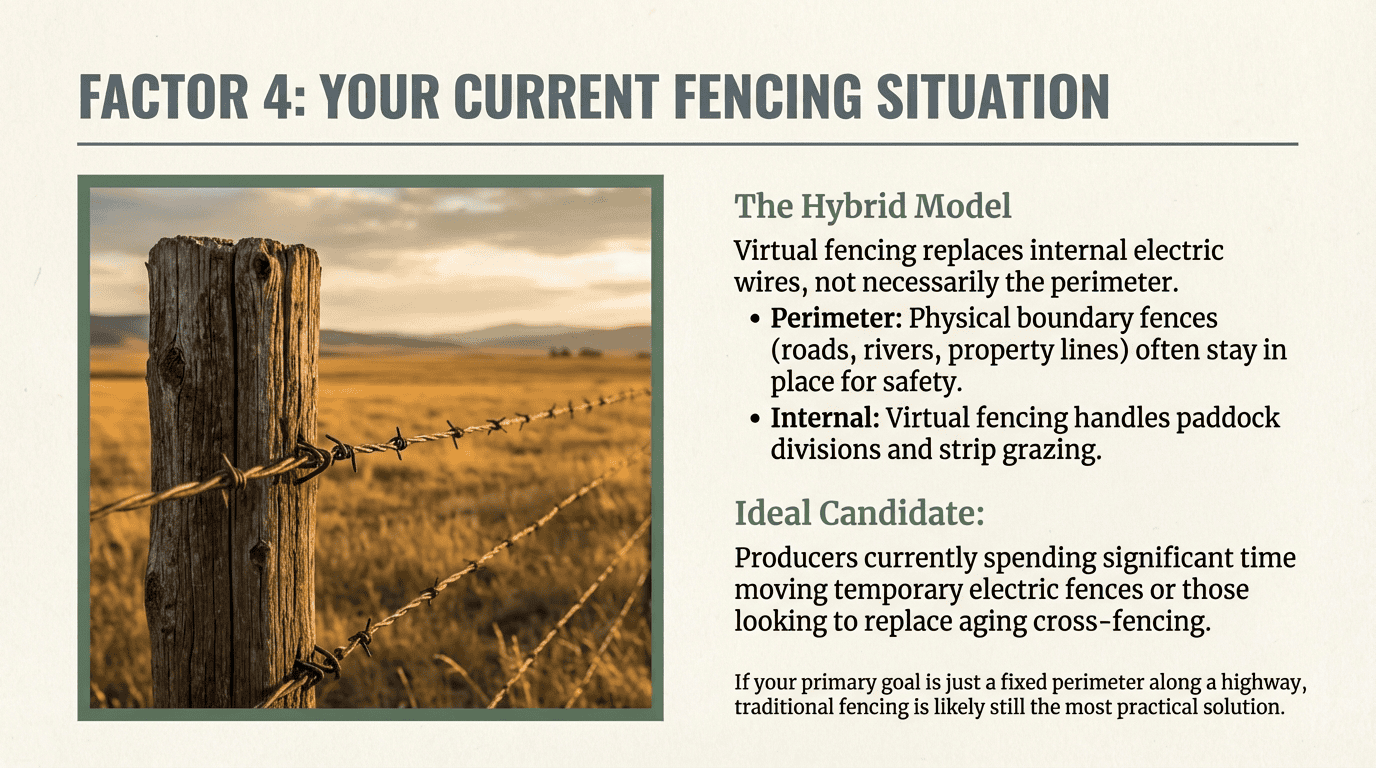
Do you have a perimeter fence? Virtual fencing replaces interior cross-fencing, not your boundary. You still need a stock-proof perimeter fence (or natural barriers on range) as a backstop if an animal pushes through or the system has a hiccup, and to keep cattle off roads and neighbouring land.
4. Your land
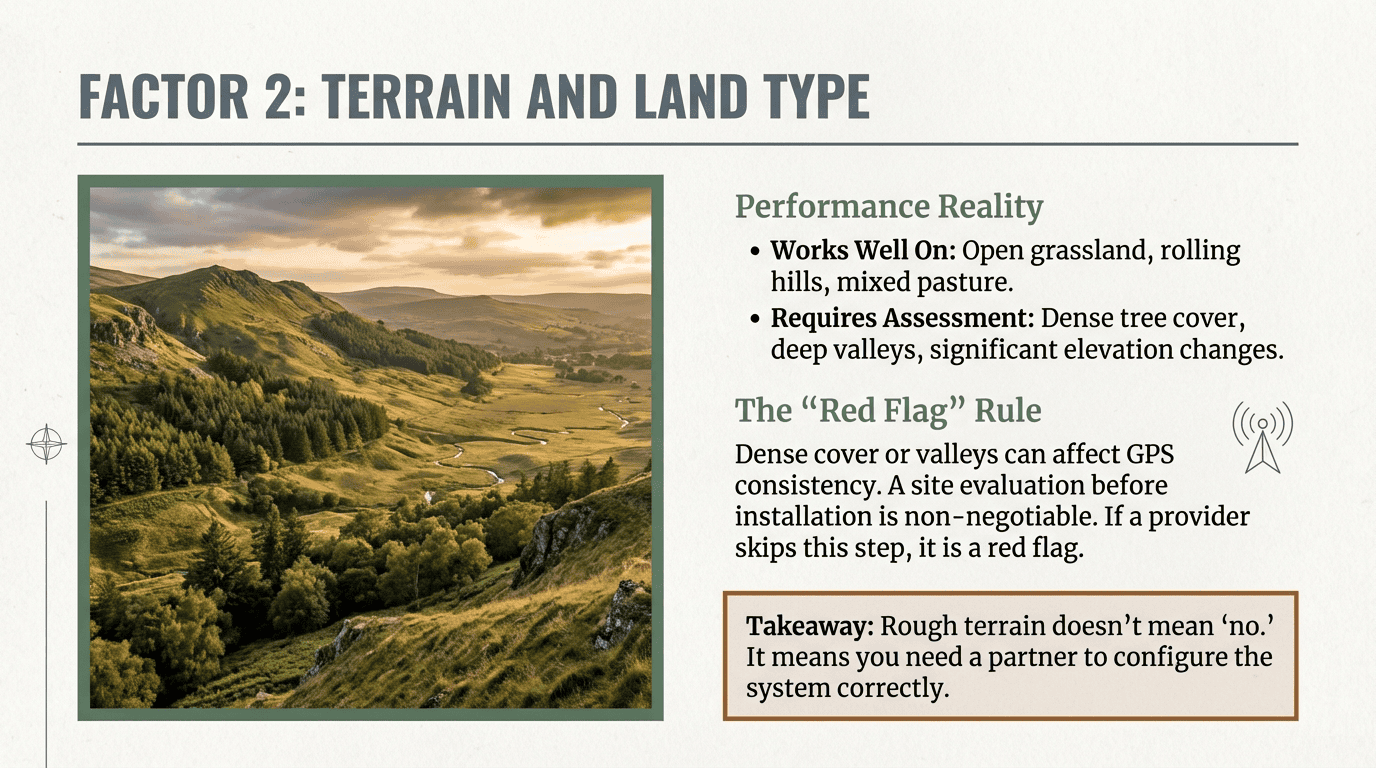
What’s your terrain like? Open, smooth or gently rolling ground gives the most accurate GPS. Steep mountain country and heavy timber reduce accuracy, but that doesn’t rule them out. Our customer Chris Solecki runs eShepherd in Northern BC on Crown range in areas with thick tree cover, and he’s been very pleased with the system.
Does your range get enough sun? Neckbands are solar charged. Most open pasture is fine, but cattle that spend long stretches under thick canopy charge less. The eShepherd solar panel is quite large, so it holds considerable charge, and this really only becomes an issue if you’re using them in the winter (e.g. for bale grazing) in areas that get a lot of fog.
How thick is the brush? Dense trees can block the satellite signal, and neckbands can snag on debris. If one catches, it’s designed to break free rather than hold the animal, but it then needs to be refitted in the chute. Studies have found between 95–99% retention rates, but it’s something to be aware of.
Is wildlife likely to bother a base station? If you need one, put it somewhere protected so bears, cattle or other animals can’t damage it.
How far are your pastures from the yard? Closer is easier for checking on cattle and refitting neckbands. If a neckband comes off on a remote lease, getting that animal back to a chute takes planning.
How do you want to lay out paddocks? Within a paddock, you can set one exclusion zone (an area to keep cattle out of, like a creek or a wetland), and each paddock boundary can have up to 30 points. That covers most layouts, but it’s worth sketching out what you have in mind.
5. Your management
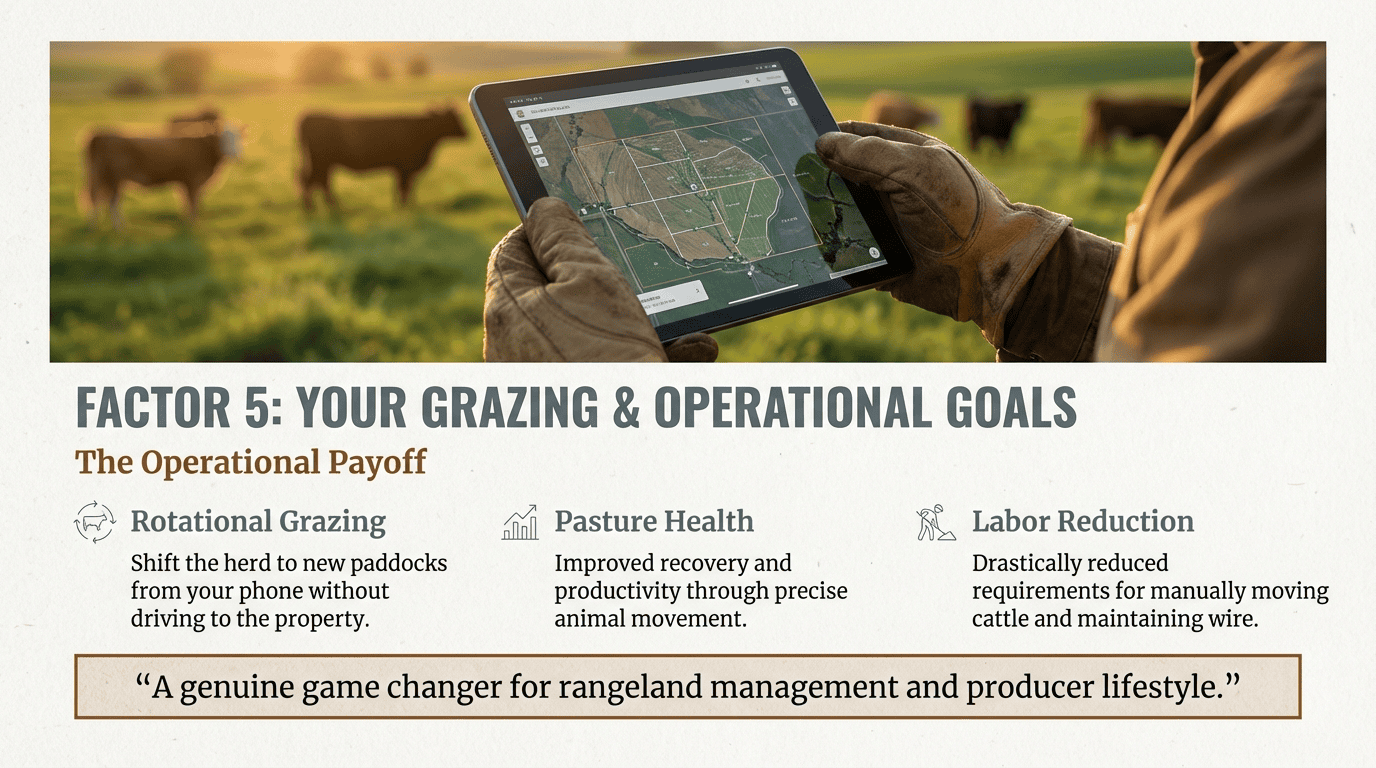
Spending days moving temporary electric fence? That’s where eShepherd saves the most time. If labour has kept you from rotational grazing, virtual fencing can make it practical.
Can someone check the app every day? Virtual fencing cuts out a lot of fence work, but it doesn’t run itself. Someone needs to watch for alerts, keep an eye on neckband battery levels and adjust boundaries as the grass changes.
Can you respond when an alert comes in? An animal outside its paddock or a neckband that’s stopped reporting needs attention that day, not next week. Consistent routines are what make the system work.
6. Your budget
Can you cover the up-front cost? Neckbands are bought outright, there’s a small monthly charge per collar while it’s turned on, and some operations need a base station. Budget a little for replacing lost or damaged neckbands too. Funding programs like OFCAF can cover up to 85% of eligible costs, but you pay up front and claim it back. Our eShepherd cost guide has the full prices and worked examples.
Quick feasibility checklist
Run through these. The more you can tick, the better eShepherd will fit.
- Someone on the operation is comfortable with a smartphone app
- You have internet, Starlink or cell service at home for alerts
- You can send a text from about 70% of your grazing area, or a base station could get online and get power
- You run at least 20 head
- Your cattle are reasonably calm and social
- You have a chute or squeeze for fitting neckbands
- You have a fenced area for the first few days of training
- You have a sound perimeter fence (or natural barriers on range)
- Someone can check the app daily and respond to alerts
- You can cover the up-front cost, with or without funding
Didn’t tick every box?
That’s normal. Most operations have one or two items that need a plan, not a deal-breaker. A remote pasture might need a base station on Starlink. Big bulls might need neckband extenders. Flighty cattle might just need a slower start.
That’s what our free assessment is for. We’ll look at your coverage, your herd and your land, and tell you straight whether eShepherd will work for you. If it won’t, we’ll say so and point you to what will, like a solar electric fence system.
Common questions
Do I need cell service everywhere my cattle graze?
No. Cellular neckbands need coverage across about 70% of the area, good enough to send a text. Where there’s none, a base station can cover it, as long as the base station itself can get online.
Can I use eShepherd on sheep or goats?
No. eShepherd is built for cattle.
Does it work in mountains or timber?
It can, but GPS accuracy drops on steep ground and under heavy canopy. Plan your boundaries with that in mind, and talk to us about your specific terrain.
What happens if a neckband gets caught on brush?
It’s designed to break free so the animal isn’t held. You’ll need to bring the animal into a chute to refit it.
Do I still need a perimeter fence?
Yes. Virtual fencing replaces interior cross-fencing, not your boundary fence, and a permanent fence is important during training.
Find out if it fits your place
Tell us about your herd, your land and your coverage, and we’ll do a free assessment. We can also show you how it works with a demo, or you can see it in action on our YouTube channel. Call 250-309-4955 or contact us.
Request Your Free eShepherd Feasibility Assessment Today!
Stop guessing. We’ll assess your herd, land, and connectivity to provide an honest, no-pressure recommendation tailored specifically to your ranch.